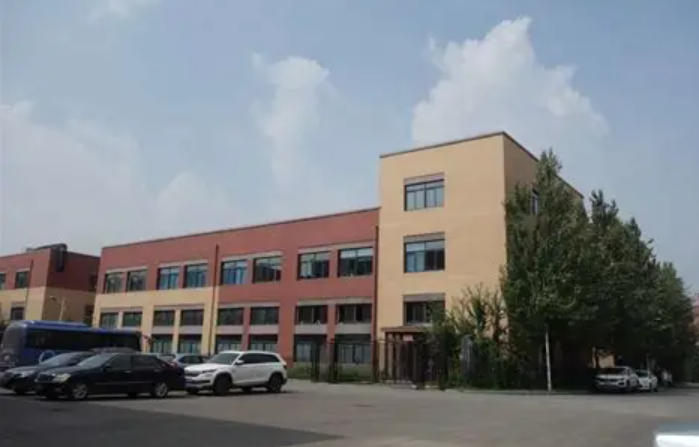
What Does a 5,000m² In-House Factory Mean?
Many bespoke brands market 'custom tailoring' but don't actually own a factory — they outsource orders to third-party processors after receiving them, with quality and delivery timelines beyond their control. QINUO has been deeply engaged in bespoke suiting for over 20 years, with a 5,000m² in-house factory located in Chengdu's Huamao Industrial Park, a team of 300+ professionals, and 300+ advanced machines. From cutting to sewing to quality inspection — full-process, in-house control.
The benefits of an in-house factory are directly felt by customers: precise, controllable delivery times (approximately 45 days, no significant delays even in peak season); consistent quality (every suit passes unified quality control standards); fast after-sales response (alterations are completed directly in-house — no shipping back to a third party).
The Birth of a Bespoke Suit: 7 Steps
Step 1: Cutting. Measurement data is transmitted back to the factory, the CAD system automatically generates a unique pattern, and the cutter cuts the fabric according to the pattern. The reason a bespoke suit fits well is determined from this very first cut — because the fabric is cut to your body measurements, not pulled from standard-size stock inventory.
Step 2: Fusing/Canvas. Half-canvas and full-canvas suits have their natural canvas layer applied at this stage. The canvas is the 'skeleton' of the suit, determining the structure of the chest and the overall silhouette. QINUO uses German Wendler canvas — top-tier quality in the industry.
Step 3: Sewing. Craftspeople sew the cut pieces together piece by piece. The most skill-intensive link is sleeve attachment — the curve and angle of the armhole determine both comfort of movement and the smoothness of the appearance. QINUO's craftspeople average 10+ years of experience — sleeve attachment is never assigned to novices.
Step 4: Pressing. After sewing, the suit undergoes meticulous pressing and shaping — using steam and pressure to make fabric texture, seams, and creases flat and well-behaved. This step determines the 'spirit' the suit carries when worn.
Step 5: Trimmings Installation. Sewing buttons, stitching buttonholes, attaching the lining. All buttonholes are machine-stitched — fine and uniform — a microscopic indicator distinguishing a good factory from a poor one.
Step 6: Final Inspection. Inspectors check each suit: are the threads clean? Are the buttons secure? Are there fabric defects? Do dimensions match the measurement data? Any single item that fails is returned for rework.
Step 7: Dispatch & Delivery. Suits that pass inspection are pressed, packaged, and sent to the store for customer fitting and collection.