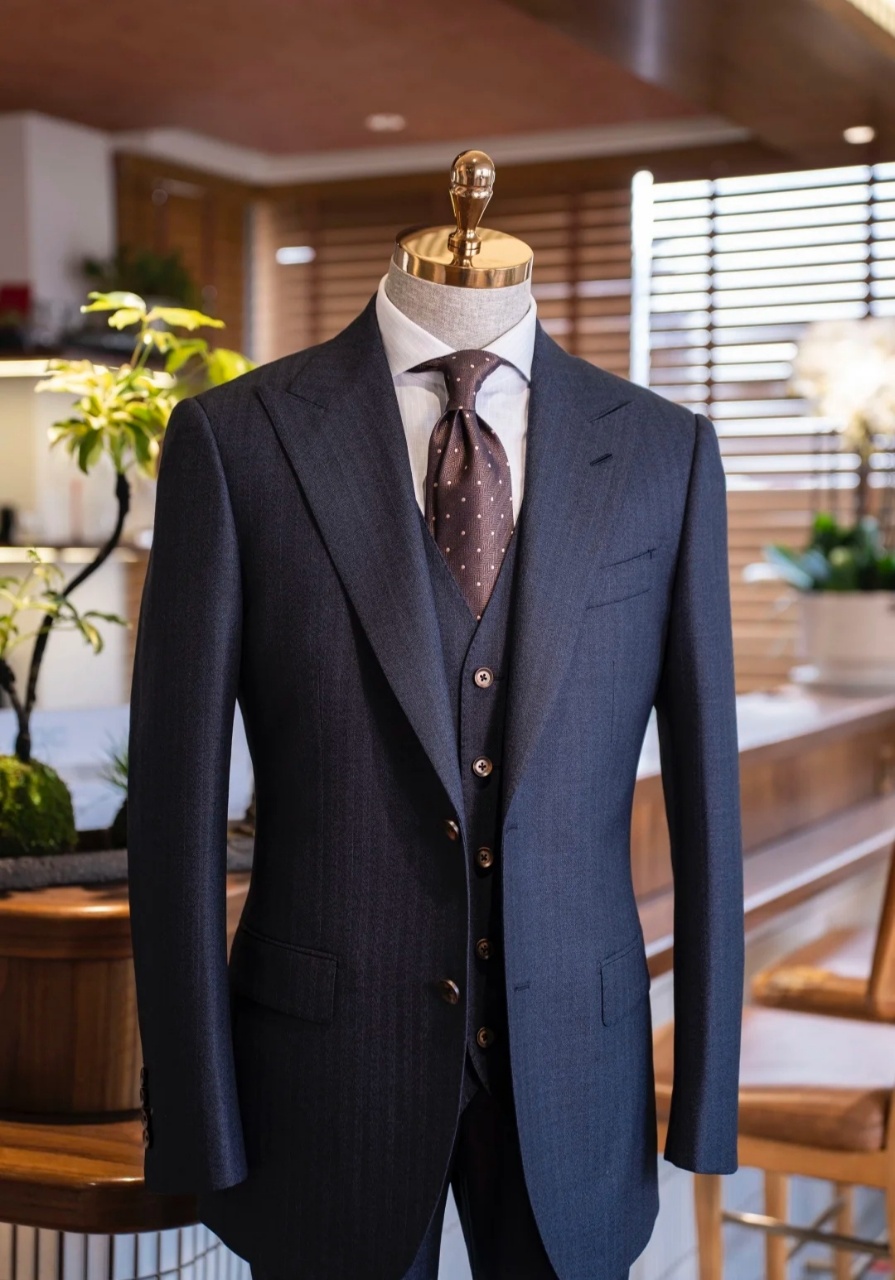
How Many Suits Is Enough?
Many professional men ask: what's the minimum number of suits? The answer is 2–3. Two allows each suit a 'rest day' to recover its shape (wool fibers need time to bounce back); three is more comfortable. If the budget allows, four is ideal — one per season in rotation. But more important than quantity is 'seasonal configuration.' A thick winter wool suit worn in summer is torture; conversely, a lightweight summer suit in winter will have you shivering.
Seasonal Fabric Selection Guide
Spring (March–May): Wool + silk blend or medium-weight pure wool (260–280g). Chengdu springs are humid — fabric needs breathability. For color, light grey, pale blue, and khaki echo spring's warm atmosphere.
Summer (June–September): Super-light wool (<240g) or silk-wool blend. Chengdu summers are stifling — the lower the fabric weight, the cooler you'll feel. Light-colored suits are more refreshing in summer, but keep one or two dark suits for important meetings — choose breathable lightweight fabric and you won't overheat.
Autumn (October–November): Standard-weight pure wool (280–320g) is the most comfortable choice. Chengdu's crisp autumn is perfect for pure wool. Checks and stripes — textured fabrics — feel especially seasonal in fall.
Winter (December–February): Flannel wool (320g+) or wool + cashmere blend. Chengdu winters are damp and cold — a good flannel suit is not only warm but soft to the touch. Dark tones dominate: charcoal, navy, and dark grey are winter classics.
Shirt and Accessory Seasonal Rotation
For shirts: spring/summer suits light blue, pale pink, and fine stripes — fresh and crisp; autumn/winter suits white, navy, and checks — composed and warm. Tie material should also change with seasons — silk ties work year-round and are the most versatile; knitted ties are autumn/winter only (they look too warm in summer).