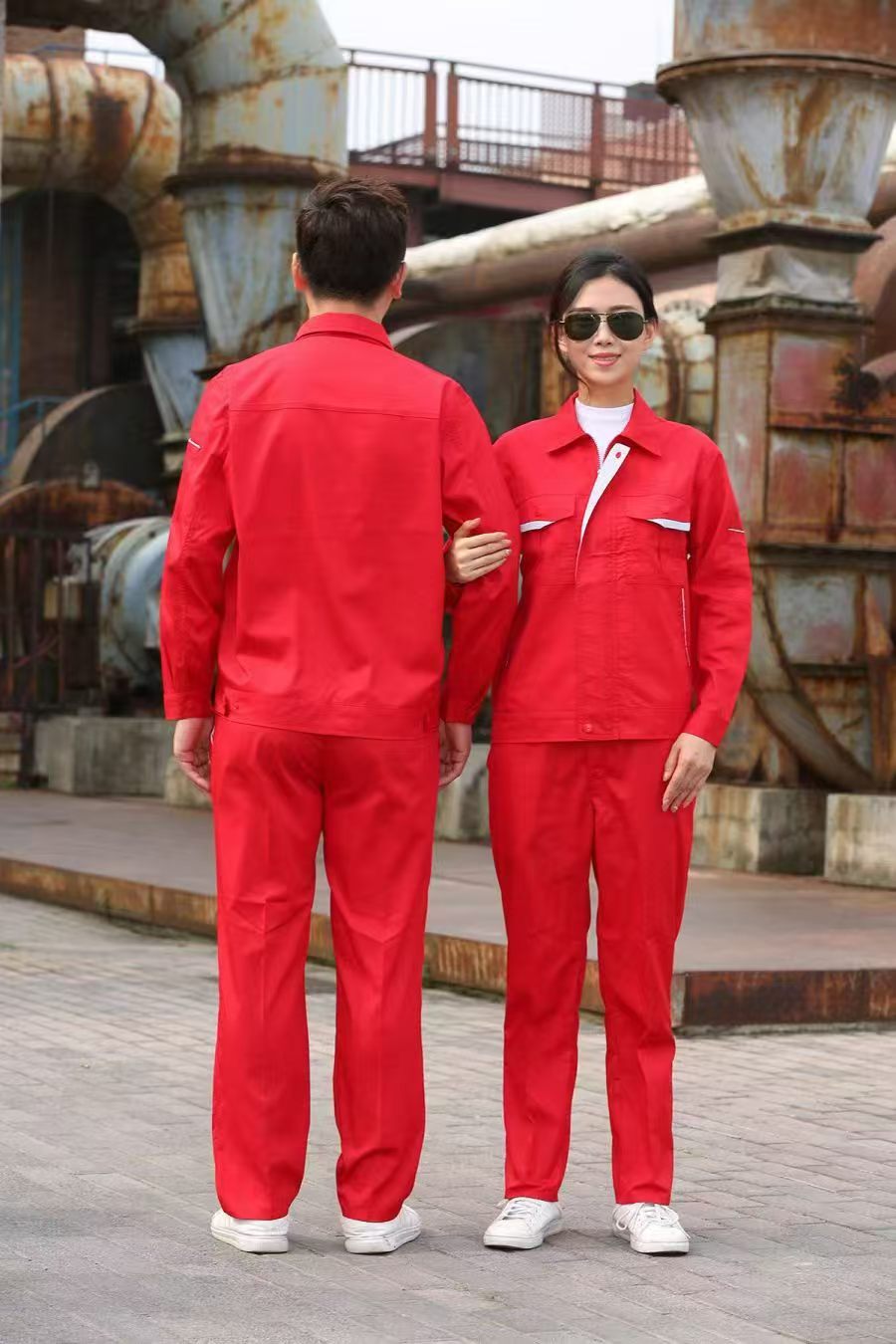
Four Fabric Types for Engineering Workwear Explained
Standard poly-cotton fabric (65% polyester, 35% cotton): From ¥128. Balances abrasion resistance and comfort, crisp and wrinkle-resistant, holds shape through industrial washing. Suitable for most workshop and factory environments — the most commonly selected fabric for group workwear. Full cotton canvas/heavy twill: From ¥168. Thicker and more abrasion-resistant, suitable for machining, welding, and other roles requiring higher durability. Heavier hand feel but strong tear resistance. Anti-static fabric: From ¥198. Embedded with conductive fibers to effectively dissipate static electricity from the body. Mandatory for petrochemical, electronics workshops, hazardous materials warehouses, and other anti-static-required environments. Flame-retardant fabric: From ¥298. Self-extinguishing when exposed to flame, low flame spread. Special-purpose for welding, smelting, firefighting, and other specialized roles — must comply with GA 10-2014 and other industry standards.
Style & Functional Design
The soul of engineering workwear is its pockets — dual chest pockets + two large side pockets + leg tool pockets + back utility pocket, meeting workers' need to carry tools and spare parts at all times. The standard jacket-style mandarin collar design (zipper or snap fasteners) is easy to put on and take off, with a draft-proof collar closure.
Customizable functional elements: embroidered corporate logo + company name on chest/back (multi-color thread embroidery or appliqué), elastic cuff closure (anti-caught-in-machinery protection), reflective strip additions (safety awareness for nighttime outdoor work), color-coded by role (maintenance blue / QC white / management navy).
Group Custom Considerations
Engineering workwear group custom requires advance confirmation of: Work scenario and safety requirements (determines fabric selection), headcount and role classification (determines styles and color scheme), budget range (determines fabric tier), delivery timeline (factory measurement to delivery typically takes 15–20 days). Recommended three-season configuration: Spring/autumn (single-layer poly-cotton) + Summer (lightweight breathable) + Winter (cotton-padded lining or thermal lining). Though the initial cost is higher, full-year adaptability significantly reduces the problem of staff discomfort affecting work efficiency.