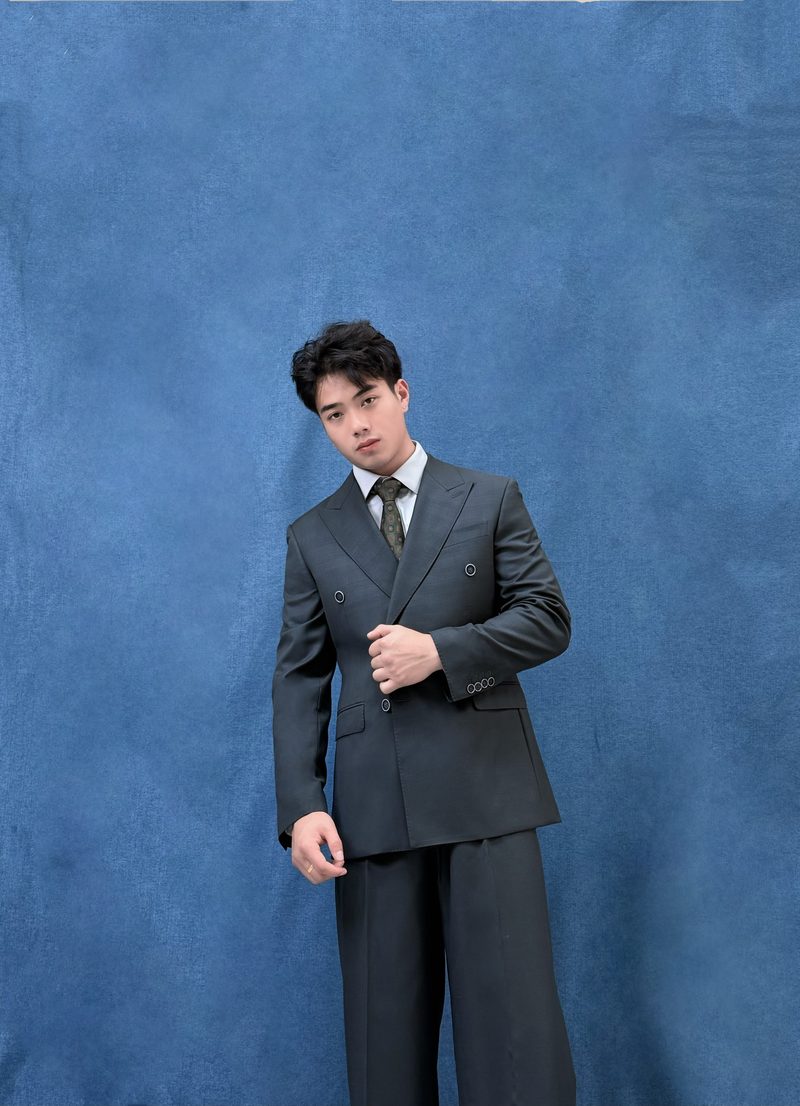
The Double-Breasted Comeback: From "Dated" to "Distinguished"
Mention double-breasted suits and many people picture their father's boxy 1980s business attire. Indeed, after decades of dominance by cleaner single-breasted designs, the double-breasted suit faded into obscurity. But fashion's cycles never fail to return — and in recent years, the double-breasted has staged a strong comeback, this time led by young men.
The reasons are clear: the continued rise of vintage aesthetics, sharp double-breasted looks going viral through film and social media, and a growing appetite among young professionals for clothing with more personality than the basics. The double-breasted's natural advantage is its sculpted silhouette — the peak lapels and layered front emphasize shoulder lines, making the wearer look taller and more commanding. Styled well, it reads as old-money elegance; styled poorly, it reads as dated.
Double-Breasted vs. Single-Breasted: Which Suits You?
Body type: The double-breasted's defined waist suppression and layered front panel visually "thicken" the torso. Slim men often look broader and more substantial in double-breasted — one reason it's a favorite among fitness enthusiasts. Broader builds should proceed with caution, as the style can amplify the midsection; consult a tailor first.
Occasion: Single-breasted is the all-rounder, covering everything from daily office wear to weddings. Double-breasted leans "statement dressing" — ideal for negotiations, launches, weddings, and dinners where presence matters. It works for daily wear too, but the rest of the outfit needs to be equally sharp.
Style stage: If your wardrobe already has two or three single-breasted suits and you want a step-up piece, double-breasted is the natural next move. For a first suit, stick with single-breasted — it's more versatile and forgiving.
4 Key Details for Wearing Double-Breasted
Detail 1: Button rules. Double-breasted has stricter conventions — standing, all buttons fastened (or at least the upper row); sitting, all unfastened. Never fasten only the lower row — it breaks the front's visual balance. Classic configurations are 6x2 or 6x1; younger 4-button versions also exist for a cleaner look.
Detail 2: Tie selection. The peak lapels already make a strong statement — your tie should complement, not compete. Choose narrow ties (6–7cm) or knitted ties in solid colors or subtle patterns. A wide, shiny tie paired with double-breasted is the main source of that "dated" look.
Detail 3: Trouser pairing. Balance the commanding jacket with high-waisted straight or slightly tapered trousers — they extend the upright silhouette and avoid the top-heavy look of skinny fits. Let the hem break lightly over the shoe.
Detail 4: Overall tailoring. This is the dividing line between "distinguished" and "dated." Old-school double-breasted was excessively loose; the modern cut demands a defined waist, higher armholes, and precise shoulder fit. That's why double-breasted depends on bespoke even more than single-breasted — off-the-rack looseness amplifies all of its weaknesses.
What to Know When Commissioning a Double-Breasted Suit
Double-breasted demands even more measurement precision than single-breasted: the large front overlap means slight deviations in chest, waist, or armhole depth are immediately visible. After choosing your tailor, always go through a baste fitting — it's the only chance to fine-tune the front's balance.
Style recommendation: for a first double-breasted suit, choose charcoal gray or navy pure wool, moderate peak lapels (8–9cm), and a classic 6x2 configuration — a setup that will still look right in ten years. Matte wool fabrics read younger than shiny ones, and a 260–290g weight works across seasons.
The charcoal double-breasted suit pictured here is a QINUO bespoke piece: a slim cut paired with high-waisted tapered trousers and a knitted tie — the double-breasted worn with a young man's sharpness. If you'd like to try the style, visit our store and our master tailors will advise based on your build.